A commercial handyman service can handle many routine building repairs and maintenance tasks, including drywall repair, painting, fixture installation, door adjustments, and other everyday upkeep. For businesses, commercial handyman services are especially useful for resolving small maintenance problems quickly, maintaining a professional appearance, and preventing minor issues from developing into larger, more expensive repairs.
ServWell National provides commercial handyman services as part of a broader approach to facility maintenance services for brick-and-mortar businesses. ServWell supports more than 1,300 shops through a network of over 2,000 technicians, with 24/7/365 availability and service across the Lower 48 states and Canada. Each project has a dedicated Project Manager who provides a consistent point of contact from acceptance through completion. For regional and national operators, that means everyday building maintenance can be coordinated alongside specialized trades through a single facility maintenance partner.
Commercial Handyman Services for Routine Building Maintenance
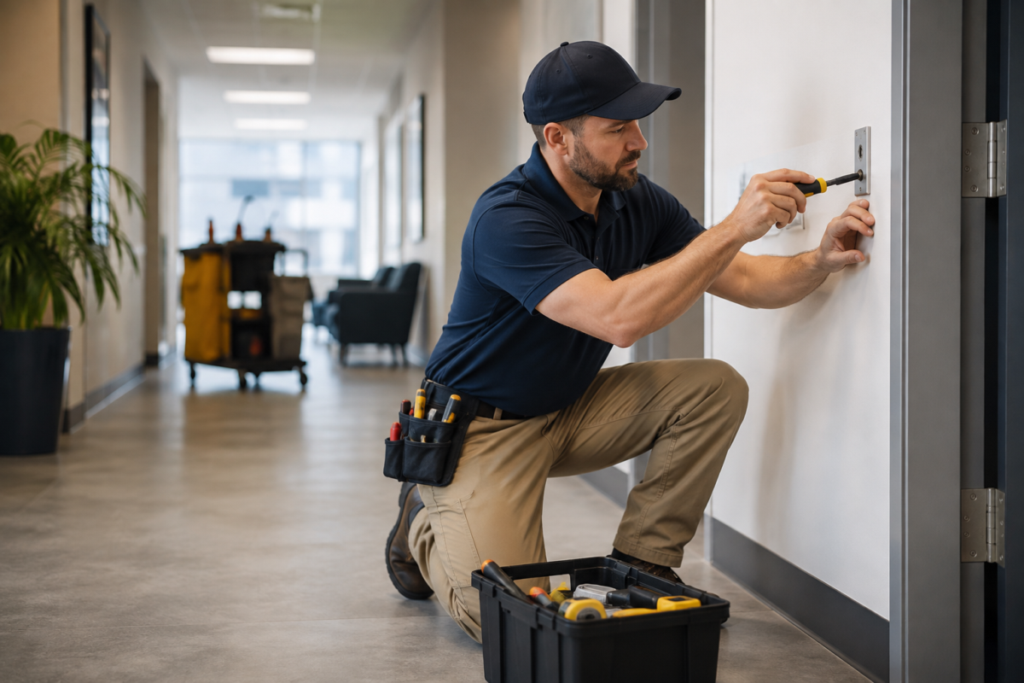
Commercial handyman services are best suited to routine repairs, adjustments, installations, and maintenance tasks that help keep a property functional and presentable. They can fill an important gap between a facility’s day-to-day maintenance needs and projects that require specialized trades.
ServWell lists handyman services among its General Facility Services, which also include locksmith services, landscape and irrigation maintenance, pest and wildlife control, and bulk debris removal. Its handyman capabilities specifically include drywall repair, painting, fixture installations, and door adjustments.
What Types of Repairs Can a Commercial Handyman Handle?
A commercial handyman can address many of the smaller repair and upkeep needs that occur through normal use of a building. The exact scope depends on the property and the work required, but common tasks can include:
- Drywall repairs
- Interior painting and touch-ups
- Fixture installations
- Door adjustments
- General minor repairs
- Routine interior upkeep
- Maintenance related to everyday wear and tear
These tasks may appear minor individually, but they have a cumulative effect on how a facility looks and operates. A damaged wall, sticking door, or broken fixture can inconvenience employees and customers, while a growing backlog of small repairs can make a commercial property feel neglected.
Addressing these items promptly also supports a more proactive approach to commercial building maintenance. Instead of waiting until several problems demand attention at once, facility managers can resolve routine issues as they appear.
When Should You Use a Handyman Instead of a Specialized Contractor?
Use a commercial handyman for general maintenance and routine repairs, while specialized building systems should be handled by the appropriate qualified trade.
For example, ServWell separates its handyman services from specialized categories such as electrical, HVAC, plumbing, mechanical systems, roofing, concrete, and glass and storefront work.
A simple way to determine which type of service may be appropriate is to consider the nature of the problem:
| Maintenance Need | Typical Service Category |
|---|---|
| Drywall damage | Handyman |
| Painting or touch-ups | Handyman |
| Fixture installation | Handyman |
| Door adjustment | Handyman |
| Lock or rekeying issue | Locksmith |
| Electrical troubleshooting | Electrical |
| HVAC malfunction | HVAC |
| Plumbing system repair | Plumbing |
| Roof or building envelope problem | Building and structural maintenance |
| Storefront glass damage | Building and structural maintenance |
The advantage of working with a multi-trade facility maintenance company is that facility managers do not necessarily have to determine and coordinate every trade independently. A single provider can help route different maintenance needs to the appropriate service category.
Why Should Businesses Fix Small Maintenance Problems Quickly?
Small facility problems should be addressed promptly because unresolved wear and damage can affect building condition, operations, safety, efficiency, and the customer experience.
ServWell specifically describes its handyman services as addressing everyday maintenance needs quickly and efficiently, helping prevent small issues from becoming costly problems.
Proactive maintenance also fits into a larger facility management strategy. According to the U.S. Department of Energy, properly planned and executed operations and maintenance is one of the most cost-effective ways to support equipment longevity, reliability, safety, and energy efficiency in commercial buildings. The Department also reports that, by one estimate, operations and maintenance measures cost about 20 times less while achieving roughly the same energy savings as energy efficiency upgrades.
For facility managers, the practical lesson is straightforward: do not allow a long list of small maintenance issues to become the normal condition of the property.
A simple routine can help:
- Inspect customer-facing and high-traffic areas regularly.
- Document damage when it is first noticed.
- Prioritize issues that affect safety or operations.
- Group appropriate non-urgent handyman tasks for efficient service.
- Track recurring problems that may indicate a larger underlying issue.
How Do Commercial Handyman Services Help Multi-Location Businesses?
For multi-location businesses, centralized commercial handyman services can simplify vendor management and create more consistent maintenance standards across facilities.
Without centralized coordination, a regional or national company may need to find separate contractors whenever a location reports damaged drywall, a door problem, a broken fixture, or another routine maintenance issue. That can lead to inconsistent pricing, service quality, communication, and documentation.
ServWell National is structured specifically to support regional and national chains of brick-and-mortar facilities. Its facility maintenance model provides coast-to-coast coverage, preventative and reactive services, and support for interior and exterior trades. ServWell also offers centralized coordination while using local technicians to perform work on-site.
This model can help facility managers:
- Reduce the number of individual vendors they coordinate
- Create more consistent maintenance processes
- Centralize work-order communication
- Improve visibility into repair status
- Address recurring needs across multiple locations
- Coordinate handyman work with specialized maintenance when necessary
For companies operating dozens or hundreds of locations, reducing administrative complexity can be nearly as important as completing the repair itself.
What Should You Look for in a Commercial Handyman Service?
A commercial handyman provider should offer dependable communication, broad service capabilities, transparent pricing, and enough coverage to support your portfolio.
Before choosing a provider, consider asking:
- Can the company support all of your locations?
- What types of handyman repairs are available?
- Can the provider coordinate specialized trades when necessary?
- How are work orders tracked?
- Who provides status updates?
- Is support available for urgent maintenance needs?
- How are pricing changes communicated and approved?
ServWell emphasizes transparent pricing, responsive communication, comprehensive trade coverage, and dedicated project management. Its facility maintenance platform can also support work-order status and progress tracking.
For a multi-site operator, these capabilities can turn handyman work from a collection of isolated repair calls into a more organized building maintenance program.
Commercial Handyman Service FAQs
What does a commercial handyman do?
A commercial handyman performs routine repair, installation, adjustment, and upkeep tasks within commercial properties. ServWell’s handyman services include drywall repair, painting, fixture installations, and door adjustments.
What is the difference between a commercial handyman and a general contractor?
A commercial handyman typically handles smaller routine repairs and maintenance, while larger construction projects or work subject to specific licensing requirements may require specialized contractors. The appropriate provider depends on the scope, complexity, and applicable requirements of the job.
Can a commercial handyman help with preventive maintenance?
Yes. Routine inspections and timely repairs can address everyday wear before it becomes a larger maintenance issue. Handyman services can therefore complement a broader preventive facility maintenance program.
Can one handyman service support multiple business locations?
Yes, when the provider has sufficient geographic coverage and centralized coordination. ServWell National supports multi-site operators with more than 2,000 technicians across the Lower 48 states and Canada.
Simplify Everyday Commercial Building Repairs With ServWell National
Every commercial property develops routine maintenance needs. The difference is how quickly and consistently those needs are handled. Keeping up with drywall repairs, painting, fixtures, doors, and other everyday issues helps maintain a facility that is functional, professional, and ready to serve employees and customers.
With ServWell National, commercial handyman work can be part of a larger, coordinated commercial facility maintenance strategy. Businesses can rely on one partner for general facility services while also having access to electrical, HVAC, plumbing, mechanical, structural, emergency, and environmental services when a job requires specialized expertise.
Ready to simplify your commercial handyman and facility maintenance needs? Contact ServWell National to request service.