A fall commercial building maintenance checklist should include HVAC inspections, roof and gutter maintenance, plumbing protection, exterior repairs, lighting checks, and safety system reviews. Completing these tasks before winter helps businesses identify potential problems, reduce unexpected equipment failures, protect their properties, and maintain a safe, comfortable environment for employees and customers.
As temperatures begin to drop, commercial property owners and facility managers have an important opportunity to prepare their buildings for changing weather conditions. Small maintenance concerns that go unnoticed during fall can become expensive repairs when winter arrives.
At ServWell National, we understand the challenges of keeping commercial properties operating efficiently throughout the year. From routine building maintenance to facility repairs and ongoing property care, our team helps businesses address maintenance needs while minimizing disruptions to daily operations. For companies managing multiple locations, having a dependable facility maintenance partner can also simplify the process of coordinating repairs and maintaining consistent property standards.
A proactive fall maintenance strategy helps businesses protect their investments, improve building reliability, and create a positive experience for everyone who enters their facilities.
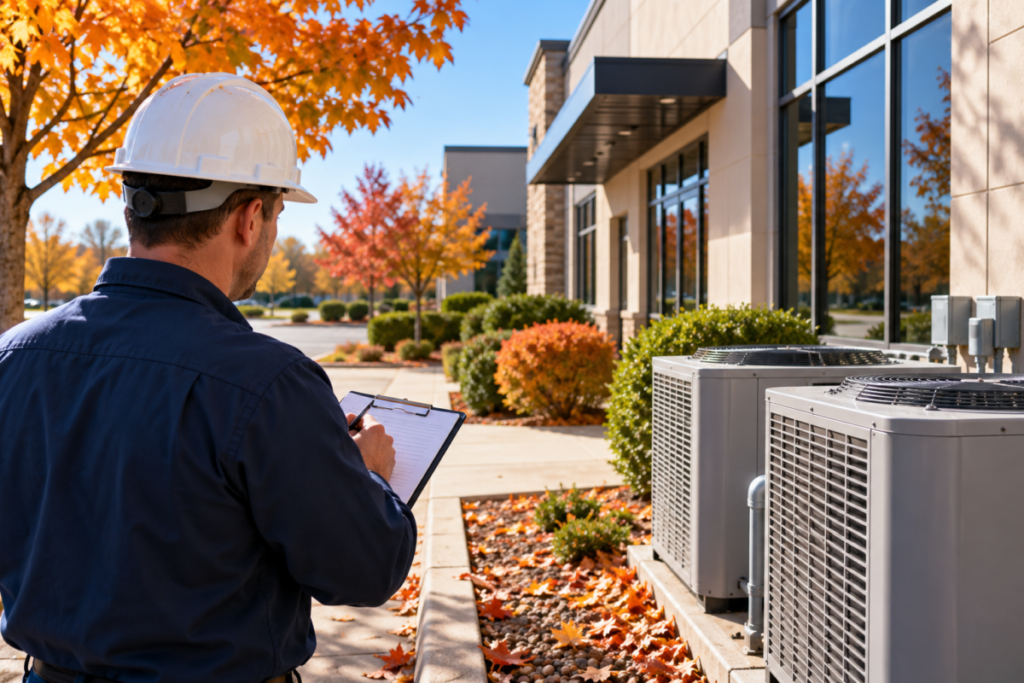
Essential Fall Facility Maintenance Tasks to Prepare Commercial Buildings for Winter
Fall is one of the most important times to evaluate the condition of a commercial property. Seasonal maintenance focuses on identifying vulnerabilities before colder temperatures, increased moisture, and unpredictable weather place additional stress on building systems.
The following areas should be included in a comprehensive fall commercial property maintenance plan.
1. What HVAC Maintenance Should Commercial Buildings Complete Before Winter?
Commercial HVAC systems should be inspected and serviced before the heating season begins. Preventive maintenance helps identify performance issues, supports efficient operation, and reduces the likelihood of unexpected heating failures.
Important fall HVAC maintenance tasks include:
- Inspecting heating equipment for signs of wear or malfunction.
- Replacing or cleaning air filters as recommended.
- Checking thermostats and temperature controls.
- Inspecting accessible ductwork and ventilation components.
- Confirming that heating systems operate properly before colder weather arrives.
- Scheduling professional service for equipment requiring repairs or adjustments.
According to the U.S. Department of Energy, heating and cooling account for a substantial portion of energy use in commercial buildings. Proper maintenance can help building operators manage energy consumption while maintaining comfortable indoor conditions.
For businesses that depend on consistent indoor temperatures, including retail stores, offices, and customer-facing facilities, reliable HVAC performance is especially important.
Scheduling maintenance early also gives facility managers more time to address problems before heating equipment is needed regularly.
2. How Can Roof and Drainage Maintenance Prevent Fall and Winter Damage?
Roof and drainage inspections help prevent water intrusion by identifying damaged roofing materials, blocked drainage paths, and deteriorating seals before seasonal rain or winter weather arrives.
Commercial roofs experience continuous exposure to sunlight, moisture, wind, and temperature changes. Over time, these conditions can contribute to deterioration that may not be immediately visible from inside the building.
A fall roof maintenance checklist should include:
- Checking for visible roofing damage or deterioration.
- Inspecting flashing around rooftop equipment and penetrations.
- Removing leaves and debris from gutters and accessible drainage areas.
- Confirming that roof drains and downspouts are clear.
- Looking for water stains on ceilings and interior walls.
- Documenting potential leaks for professional evaluation.
The National Roofing Contractors Association recommends regular roof inspections, including evaluations following severe weather events.
For commercial property managers, preventive roof maintenance is particularly valuable because water intrusion can affect ceilings, insulation, electrical components, inventory, and interior finishes.
Addressing minor concerns before winter may help avoid larger repairs and operational interruptions.
3. What Plumbing and Exterior Repairs Should Be Prioritized During Fall?
Fall plumbing and exterior maintenance should focus on protecting exposed water lines, correcting drainage problems, and repairing damaged building components before freezing temperatures or severe weather arrive.
Commercial properties often contain plumbing systems and exterior features that require seasonal attention.
Facility managers should prioritize the following tasks:
Plumbing maintenance
- Inspect exposed pipes in areas vulnerable to freezing.
- Check faucets, toilets, and plumbing fixtures for leaks.
- Examine accessible supply lines and connections.
- Identify slow drains or recurring drainage issues.
- Confirm that outdoor water connections are prepared for seasonal conditions.
Exterior building maintenance
- Inspect doors, windows, and weatherstripping for gaps.
- Repair damaged exterior surfaces where necessary.
- Check sidewalks and walkways for uneven or deteriorating areas.
- Examine parking lots for cracks or drainage problems.
- Evaluate exterior signage and building fixtures for visible damage.
These maintenance tasks can improve both building protection and customer experience.
For example, deteriorating door seals may allow cold air to enter a commercial space, while damaged sidewalks can create accessibility and safety concerns.
By addressing these issues during fall, businesses can enter winter with fewer unresolved maintenance problems.
4. Why Should Commercial Lighting and Safety Systems Be Checked in the Fall?
Fall lighting and safety inspections are important because shorter daylight hours increase the need for reliable exterior illumination, while seasonal weather can create additional hazards around commercial properties.
Properly maintained lighting helps customers, employees, and visitors navigate entrances, parking areas, sidewalks, and loading zones.
A fall safety inspection should include:
- Testing exterior lighting around entrances and walkways.
- Checking parking lot and security lighting.
- Inspecting interior lighting in common areas.
- Confirming that emergency lighting functions properly.
- Checking exit signage for visibility and operation.
- Reviewing fire protection inspection and testing schedules.
- Identifying trip hazards around building entrances.
The Occupational Safety and Health Administration (OSHA) requires employers to maintain walking-working surfaces in safe conditions under applicable workplace safety standards.
Regular inspections help facility managers identify issues that could affect employees or visitors.
Lighting maintenance can also support a more welcoming customer experience, particularly for businesses operating during early morning or evening hours.
5. How Can Businesses Organize Fall Maintenance Across Multiple Locations?
Businesses managing multiple commercial properties should use a consistent maintenance checklist, prioritize repairs by urgency, and maintain clear records of inspections and completed work.
Without an organized process, maintenance concerns can be overlooked or handled inconsistently across locations.
A practical approach includes:
- Create a standardized checklist. Identify the systems and building features that require fall inspections at each property.
- Prioritize urgent concerns. Address safety hazards, active leaks, and equipment failures before cosmetic improvements.
- Schedule preventive service. Arrange inspections and maintenance before seasonal demand increases.
- Document completed work. Maintain records of inspections, repairs, and recommended follow-up services.
- Review outstanding issues. Confirm that unresolved maintenance concerns have a clear plan for completion.
Working with a facility maintenance provider can help businesses coordinate these responsibilities while reducing the administrative burden on internal teams.
For multi-location businesses, consistency is especially important because maintenance standards directly affect operational reliability and the customer experience.
Frequently Asked Questions About Fall Commercial Building Maintenance
When should commercial buildings begin fall maintenance?
Commercial buildings should begin fall maintenance before colder temperatures and winter weather become common. Early scheduling provides time to inspect building systems, identify necessary repairs, and complete preventive service.
How often should commercial properties receive maintenance inspections?
Commercial properties should receive routine inspections throughout the year, with additional seasonal evaluations when weather conditions change. Inspection frequency depends on building age, equipment requirements, occupancy, and operating conditions.
What happens if commercial building maintenance is delayed?
Delayed maintenance can allow minor problems to develop into more extensive repairs. Issues such as roof leaks, plumbing deterioration, and HVAC malfunctions may become more disruptive and expensive when left unresolved.
Can a commercial facility maintenance company help manage seasonal repairs?
Yes. A commercial facility maintenance company can help coordinate inspections, routine maintenance, and repair services. This support can be especially valuable for businesses managing multiple properties or locations.
Prepare Your Commercial Property for Winter With ServWell National
Fall maintenance is an opportunity to protect your commercial property, reduce avoidable disruptions, and prepare building systems for seasonal demands.
At ServWell National, we help businesses manage commercial facility maintenance and repair needs so they can stay focused on their operations.
Ready to prepare your commercial building for the colder months? Contact ServWell National to discuss your facility maintenance needs and take the next step toward a more proactive maintenance plan.